Freight forwarding in Malaysia — sea, air and express under one account

A freight forwarder moves your cargo. What decides whether it arrives on time and on budget is everything around the movement — classification, approvals, certificates of origin and the customs declaration. ADS has coordinated both for Malaysian importers and exporters since 2009.

Talk to a logistics specialist
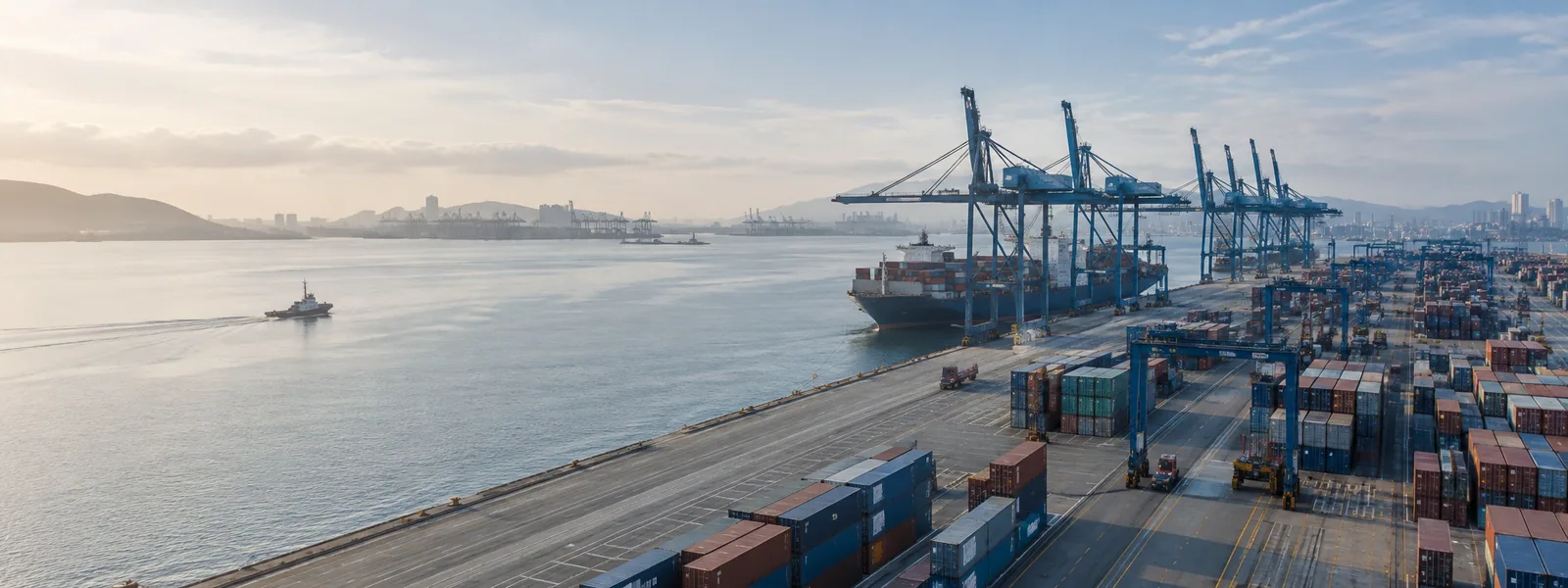
Container terminal and vessel operations viewed across a harbour.

Not a carrier. The party that makes the carriers work together.

A freight forwarder does not own the ship or aircraft. It arranges and manages the movement end to end, coordinating the work around the physical journey so each handoff is ready before the cargo reaches it.

The movement is the visible part. The rest is where shipments fail: a permit nobody applied for, a classification nobody checked or a certificate that does not match the shipment.

Books the space

Shipping lines, airlines, NVOCCs and consolidators are selected by lane, volume and shipment requirements.

Consolidates cargo

Part-container or repeat volume is combined where consolidation produces a better route and cost position.

Prepares documentation

Bills of lading or air waybills, commercial invoices, packing lists and origin documents are checked as one shipment file.

Classifies the goods

The likely duty, tax and approval requirements are established before the cargo moves.

Coordinates clearance

The declaration and supporting documents are prepared against the position agreed with you before filing.

Identifies approvals

The relevant Malaysian product regime is identified early enough to sequence the application with the shipment.

Delivers onward

Cargo moves to your door, distribution centre or appointed retail outlets after release.

Freight forwarder or courier?

They are different products. Choosing between them is about shipment fit, not declaring one mode better than the other.

Courier and freight-forwarding comparison
Comparison pointCourier / expressFreight forwarding
What you are buyingSpeed on an integrated networkCapacity on a route built for your cargo
Priced onChargeable weight per parcel under the carrier rate structureVolume, lane and mode, quoted for the shipment
DocumentationStandardised within the carrier networkPrepared and checked for the shipment
CustomsHandled within the carrier clearance processClassification and declaration position agreed before filing
Good forUrgent, small or unpredictable consignmentsPlanned, heavy or repeating volume
Less suited toRegular heavy volumeA single urgent sample

Most businesses need both. The mistake is defaulting to the first method the business used and never checking whether later volumes still fit it.

ADS arranges both express and freight forwarding, so the recommendation can follow the shipment: urgency, weight, frequency, handling and the complete door-to-door requirement.

Importing into Malaysia, step by step

  1. Check the product before ordering

    We establish the classification, estimated duty and tax, and which Malaysian approval regimes may apply.

  2. Agree the Incoterm and mode

    EXW, FOB and CIF allocate different tasks; sea LCL, sea FCL, air and express suit different shipment patterns.

  3. Collect at origin

    Cargo is collected from the supplier or manufacturer through our representatives in China and vetted partners elsewhere.

  4. Check the paperwork before movement

    Commercial and origin documents are matched to the shipment before a vessel sails or an aircraft departs.

  5. Book and move the freight

    We book sea or air capacity, consolidated or full container, against the route agreed with you.

  6. Clear at Port Klang or KLIA

    The declaration is checked against the agreed position and shown to you for approval before filing.

  7. Apply required product marking

    Where SIRIM or MCMC marking is required, it is applied after clearance and before delivery at our operating and handling facility.

  8. Deliver onward

    Cargo moves to your door, distribution centre or retail outlets nationwide.

Exporting from Malaysia, step by step

  1. Establish destination requirements

    We identify what must be prepared at origin before the cargo leaves Malaysia.

  2. Agree the Incoterm

    The named term decides who arranges each stage and where transport risk transfers.

  3. Collect and consolidate

    Repeat volume is consolidated when its frequency and destination make that structure worthwhile.

  4. Prepare export documents

    The shipment file and origin evidence are prepared for the destination entry that follows.

  5. Book and move the cargo

    The shipment travels by air or sea, direct or consolidated, according to the agreed route.

  6. Coordinate destination clearance

    The destination entry is coordinated against the requirements established before departure.

  7. Hand off to final delivery

    Released cargo is passed into the agreed final-delivery route in the destination market.

Every mode, chosen around the cargo

Four international modes sit under one account. The right answer depends on volume, urgency, handling, frequency and destination.

  • Sea freight — LCL

    Part-container consolidation for volume that does not fill a container. The common 12–18 CBM crossover is a planning guide that must be tested against the actual lane and quote.

  • Sea freight — FCL

    A full container where volume justifies one, with the carrier booking, free time and empty return planned together.

  • Air freight

    Planned volume that needs speed without the integrated express product, structured around the shipment’s chargeable weight and Incoterm.

  • International and domestic express

    Urgent and smaller consignments managed across leading express carriers on one account, with account management, consolidated billing and an express customer portal.

  • Scheduled road freight to Singapore

    Consolidated groupage departs every Tuesday and Thursday on a fixed schedule rather than waiting for a load to fill.

As a general guide, sea transit runs 14 to 45 days depending on the lane, vessel and shipping line. The actual transit is confirmed for the booked sailing.

What ADS adds around the freight

  • The compliance layer

    We identify the Malaysian agency governing the product, coordinate the application through the relevant specialist and sequence it against the shipment.

  • Approvals held in our own name

    ADS holds Energy Commission Certificates of Approval for mains-powered electrical equipment and MCMC Compliance Approvals for transmitting products.

  • Representatives in China

    Origin-side coordination starts before collection rather than after cargo reaches the export terminal.

  • Multiple carrier routes

    Shipping lines, airlines, NVOCCs and consolidators are selected by lane and volume instead of forcing every shipment through one relationship.

  • WCA World membership

    A global network of independent freight forwarders provides vetted local coordination in the markets we ship to.

  • Marking before delivery

    Required SIRIM or MCMC labels can be applied in transit at our 10,000 sq ft operating and handling facility, after clearance and before delivery.

  • Since 2009

    ADS has moved cargo into and out of Malaysia for importers, exporters, manufacturers and retail programmes since 2009.

  • No minimum volume.

    A first shipment used to test a market is a valid place to start.

Where we ship

Our established inbound origins are China, Hong Kong and Vietnam. Our established consolidated air lanes outbound run to the United States, Vietnam, Hong Kong and Taiwan.

Asia
China, Hong Kong, Vietnam, Taiwan and Malaysia’s principal regional trading markets
Beyond Asia
The Middle East, Europe, North America and Oceania, according to the shipment and available route

Ask anyway. These are established lanes and principal markets, not a limit on where we book.

FAQ

What does a freight forwarder do?

A freight forwarder arranges and manages cargo movement end to end: booking capacity, consolidating, preparing shipment documents, coordinating classification and customs clearance, identifying required approvals and arranging delivery. It makes the carriers and handoffs work together for the shipment.

What is the difference between a freight forwarder and a courier?

A courier provides an integrated, time-focused network suited to urgent, small or unpredictable consignments. Freight forwarding builds a shipment-specific route suited to planned, heavy or repeating volume. Most businesses use both.

Do I need a freight forwarder if my supplier arranges shipping?

Often. The supplier’s arrangement may cover the main carriage without checking what Malaysia requires of the product, whether the Incoterm fits your commercial position or whether the origin documents support the intended duty treatment.

Do you handle both imports and exports?

Yes, into and out of Malaysia.

Which ports do you work through?

Port Klang — North Port and West Port — for sea freight, and KLIA for air freight and express.

How long does sea freight take?

As a general guide, 14 to 45 days depending on the lane, vessel and shipping line. We confirm the actual transit for the booked sailing.

Should I ship LCL or a full container?

It depends on volume, frequency, lane, cargo density and handling risk. In our experience the crossover commonly falls between 12 and 18 CBM, but it must be calculated against the actual shipment and quotes.

Can you handle customs clearance as well as the freight?

Yes. We settle the classification and document position, check the declaration against that position and show it to you for approval before filing.

Can you arrange cargo insurance?

Yes. Carrier liability under a bill of lading or air waybill is limited by international convention and calculated on weight rather than cargo value. We can arrange separate cargo cover with the booking.

Can you ship batteries and other dangerous goods?

Yes. Battery-related items and other dangerous goods are routed through approved IATA or IMDG channels, with the shipment documents and booking prepared accordingly.

Is there a minimum shipment size?

No.

Do you only handle cargo you also clear?

No. We take clearance-only work where another provider moved the freight, and we move freight for customers who arrange their own clearance.

Tell us what you are moving

Share the product, origin, destination, volume and frequency. We will come back with what it needs at both ends, an estimated landed cost and the mode that fits — including when the way you ship now is already the right way.

Talk to a logistics specialist