FCL container shipping to and from Malaysia

A full container is the lowest-cost sea option at the right volume — and the easiest place to lose the saving again to free time you did not know you were burning. ADS books the container, clears it at Port Klang, and manages what happens between discharge and the empty container return.

Talk to a logistics specialist
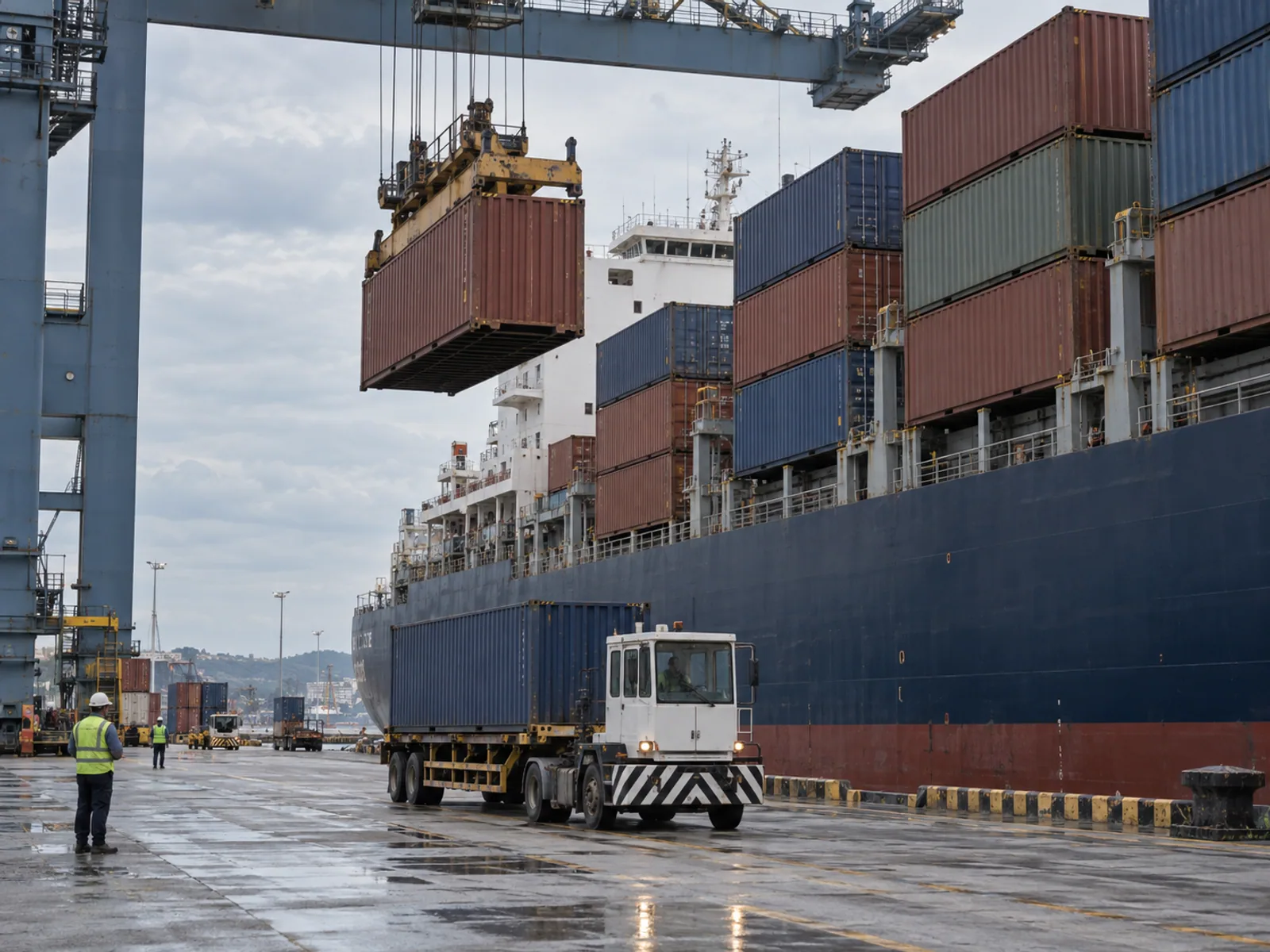
A container is lifted between a vessel and a working terminal.

It is not only about having enough cargo

Once cargo approaches a container’s capacity, FCL is usually cheaper in total than buying the equivalent space as LCL. In our experience, the crossover commonly falls somewhere between 12–18 CBM — well before a 20-foot container is full. That is a planning guide, not a quote.

The actual decision depends on the lane, season, cargo density, handling risk and what each quote includes. ADS prices FCL and LCL on the same terms for the shipment rather than treating the crossover as a guarantee.

Fewer handling points

The container is packed and sealed at origin and opened at destination without consolidation and deconsolidation at shared facilities.

A shorter door-to-door cycle can result

FCL skips the consolidation window and deconsolidation queue, although the carrier schedule and actual sailing still require booking confirmation.

Departure is planned around your cargo

You are not waiting for a consolidation to fill, subject to carrier space and confirmation for the specific sailing.

LCL still fits smaller volume

LCL usually remains the better comparison well below half a container, for frequent small quantities or while a product line is still proving its demand.

What actually fits

Container capacities are approximate industry figures and vary slightly by carrier and equipment. The practical limit may be weight rather than volume, especially for dense cargo.

Approximate standard-container capacity
ContainerApproximate internal capacityTypically suits
20ft standardAround 33 cubic metresDense, heavy cargo where weight is often reached before space
40ft standardAround 67 cubic metresGeneral-purpose volume for most containerised cargo
40ft high cubeAround 76 cubic metresLight, bulky cargo where volume runs out before weight

A 40ft container is not automatically twice the price of a 20ft, so the booking comparison uses the cargo’s volume, weight and road limits rather than the box size alone.

Import FCL into Malaysia

  1. Booking and equipment

    The container and carrier option are selected for the lane and required timing, with space and sailing confirmed for the booking.

  2. Origin arrangement

    Collection or stuffing takes place at the supplier’s premises or at port. On the China lane, ADS representatives and agents handle the origin end.

  3. Documents before sailing

    The bill of lading, commercial invoice, packing list and any certificate of origin are checked against the shipment before departure.

  4. Arrival at Port Klang

    At North Port or West Port, the import declaration is prepared and shown to you before filing, then duty, tax and SST are settled for release.

  5. Haulage, delivery and empty return

    The container moves to your warehouse, distribution centre or customer, with the empty return managed against the confirmed detention clock.

Export FCL out of Malaysia

  1. Set the Incoterm first

    EXW, FOB, CIF and DAP place costs, tasks and risk at different points. The quotation starts from what the sale terms actually require.

  2. Book, collect and stuff

    The container is booked and packed at your premises or at port, subject to the arrangement and confirmed carrier space.

  3. Prepare export documents

    The export declaration uses the correct classification, with a certificate of origin where the buyer needs one to claim a preferential rate.

  4. Match loading to the booking

    Documentation and terminal requirements are checked against the confirmed booking before departure.

Malaysia's trading markets, in both directions

Inbound to Port Klang, our established origins are China, Hong Kong and Vietnam. On the China lane, our own representatives and agents handle the origin end.

Beyond those origins, ADS books through multiple shipping lines, NVOCCs and consolidators rather than relying on one carrier relationship.

Asia
Singapore, China, Hong Kong, Taiwan, Japan, South Korea, Thailand, Vietnam, Indonesia, the Philippines, India
Americas
the United States, Canada, Mexico
Europe
the Netherlands, Germany, the United Kingdom, France, Italy, Spain
Oceania and the Middle East
Australia, New Zealand, the UAE, Saudi Arabia

If your lane is not on that list, ask anyway. It is a list of where Malaysian trade goes, not a limit on where we book.

Door to door, or port to port

Port to port includes

  • The ocean leg between the named ports
  • Only the origin and destination items stated in the quotation
  • No assumption that haulage, clearance, duty or delivery is included

Door to door can include

  • Origin collection and haulage
  • Terminal handling and customs clearance
  • Destination haulage and final delivery

Demurrage and detention run on separate clocks

These charges appear together on invoices but apply in different places and are charged by different parties.

Know which clock is running:

  • Demurrage

    Demurrage is charged when your container sits inside the port beyond its free time. The clock starts on discharge from the vessel; the terminal charges for the occupied space.

  • Detention

    Detention is charged when your container is outside the port beyond its free time — at your premises, on the road or waiting to be unpacked. The clock stops when the empty container is returned.

Both charges accrue daily and commonly escalate in tiers. Documents, approvals, classification support, haulage, unloading slots and the empty return all affect whether the clocks become an avoidable cost.

Free time is confirmed for the booking, not promised by the website

Free time is set by the carrier and varies by line, lane and contract. As a working guide on the lanes ADS runs into Port Klang, carriers commonly allow around 7 free days for demurrage and somewhere between 7 and 14 days for detention.

What ADS does about the clocks:

  • Confirm the actual allowance

    We confirm your actual free time per carrier and per lane at booking and tell you the date each clock runs out.

  • Prepare before arrival

    The declaration and supporting documents are prepared and checked with you before the vessel arrives.

  • Identify product requirements early

    Product-specific requirements are flagged at quotation and routed to the appropriate approval process, reducing the risk of an arrival delay.

  • Plan haulage and empty return

    Haulage is booked against the release plan, and the empty-container return is managed against the confirmed detention allowance.

The published ranges describe common carrier practice. They are not an ADS commitment and are not the numbers used to manage a live container.

Why ADS

  • Port Klang entry points

    ADS works containers through North Port and West Port and prepares the declaration for review before filing.

  • Multiple carrier routes

    Shipping lines, NVOCCs and consolidators are compared by lane and volume rather than forcing every container through one relationship.

  • Freight and compliance planned together

    Classification, duty position, certificates of origin and product-specific requirements are checked before cargo moves.

  • China origin support

    ADS representatives and agents handle the origin end on the principal China inbound lane.

  • Since 2009

    Moving cargo into and out of Malaysia.

  • Standard equipment scope

    ADS handles standard containers only. Reefer, open-top and flat-rack equipment is outside the published service scope.

FAQ

What does FCL mean?

Full container load. You book the whole container, which is packed and sealed at origin and opened at destination without other shippers’ cargo inside.

Is FCL cheaper than LCL?

Usually, once the shipment reaches the lane-specific crossover. ADS commonly sees that point somewhere between 12–18 CBM, but the real answer depends on the lane, season, cargo density and included charges.

How much fits in a container?

Approximately 33 cubic metres in a 20ft standard container, 67 in a 40ft standard and 76 in a 40ft high cube. Dense cargo can reach its weight limit before the available volume is filled.

Do I have to fill the container?

No. FCL can still be the better option before the container is full, or where avoiding shared-facility handling matters.

How long does it take?

Sea transit generally runs 14 to 45 days depending on the lane. FCL often has a shorter door-to-door cycle than LCL because it skips consolidation and deconsolidation. The carrier schedule is confirmed for the specific sailing at booking.

What is demurrage, and what is detention?

Demurrage applies while the container remains inside the port beyond free time. Detention applies after it leaves the port and continues until the empty container is returned.

How many free days do I get?

It depends on the carrier and lane. As a working guide, carriers commonly allow around 7 free days for demurrage and 7 to 14 days for detention on the Port Klang lanes. ADS confirms the actual allowance and deadline for the booking.

Who pays demurrage if customs clearance is delayed?

Demurrage is charged under the carrier and terminal terms applying to the booking. Commercial responsibility depends on the shipment agreement and is not allocated on this page. ADS focuses on showing you the clock and completing preventable work before arrival.

Can you deliver to more than one address?

Yes. A container can be unpacked into several deliveries, including a planned retail distribution programme.

Do you handle both import and export?

Yes, into and out of Malaysia.

Can I track the shipment?

The customer portal currently covers express. Sea freight is tracked against the bill of lading, and ADS provides updates against the confirmed booking.

Do you handle dangerous goods?

Yes, where the cargo and route are accepted. ADS prepares the documentation and booking, then routes the shipment to IMDG-approved carriers who sign the shipper’s declaration.

Do you handle reefer, open-top or flat-rack containers?

No. ADS handles standard containers only. Reefer, open-top and flat-rack equipment is outside the published service scope.

Can you arrange marine cargo insurance?

Yes. Carrier liability under a bill of lading is limited and calculated on weight rather than the value of the goods. Marine cargo insurance covers the value. We can arrange it with your booking when raised before shipment.

Send us the cargo, and we will tell you whether it should be a container at all

Send the volume, weight, lane and frequency. ADS will compare FCL and LCL on the same terms, confirm the carrier schedule and free time, and identify the documents required before movement.

Talk to a logistics specialist